

This post contains affiliate links. If you buy something through these links, I may earn a small commission at no extra cost to you. I only recommend gear I’ve actually used out on the trails and really loved! Read my full disclaimer.
For our 8-months road trip around the Top End, East Arnhem Land and Western Australia last year we ummed and ahhed about our communications setup right up until leaving. It felt like such a headache.
We’ve always travelled with a personal locator beacon (PLB) when we’ve explored remote Australia so emergency help was always within a day’s reach if needed. For our extended road trip though, we were looking for more than just a red emergency button.
Here’s what we ended up with, and the changes we would make if we knew then what we know now.

OUR OUTBACK COMMUNICATIONS SETUP
The goal for our comms setup was straightforward:
- Be able to seek help in case of emergency
- Stay in touch with family and friends while away, and periodically be able to contact them via phone/FaceTime
- Have internet access for various admin things back home (e.g. pay bills) and plan our trip along the way
We also planned to go on one or two multi-day hikes along the way so our emergency comms needed to be appropriate for that kind of activity as well. Our setup was never going to be overly complicated and we felt we had no need for 24/7 connectivity.
Two things to note upfront:
- We like things being simple: We are not gadget people, and we want things to just work as easily as possible.
- We don’t mind being offline for a few days, maybe even a week: In fact, we quite enjoy not being connected all the time, and love the peace and quiet that being uncontactable can bring.
So, after way too much time comparing and researching our options—and effectively running out of time for more changes—we landed on the following:
- Telstra upfront plan with a new eSIM
- Our existing personal locator beacon (PLB) registered with AMSA
- Zoleo satellite device + monthly subscription
Less than a month into our trip, we bought a Starlink Mini and added that into the mix.
TELSTRA UPFRONT eSIM: THE MOBILE BASELINE
If you want the widest mobile coverage across Australia, Telstra is still your default choice. The network has expanded significantly across regional and remote Australia in recent years—where there was once no reception, towers have since gone up.
Obviously, reception is always going to be more limited in far-flung corners and remote national parks but that’s totally the appeal for us.
I use ALDI Mobile as my everyday plan so getting a full-service Telstra plan was my obvious first step. I didn’t want to port my number or change my existing plan, so I simply bought a Telstra eSIM to use as a second line on my phone.
I signed up for Telstra’s lowest upfront plan, which gave us 50Gb for $80 a month—steep but the extra network coverage was worth it. With any upfront plan, Telstra now also bundles in a satellite texting feature (‘Telstra SpaceX’) automatically when you drop out of range. I found that it’s still patchy, sometimes it would drop in and out even if we had a clear sky, or not connect at all. That said, it can potentially give you basic text capabilities when there’s no mobile coverage.
My existing ALDI plan also worked in most regional towns giving me a secondary data allowance every month that I could use whenever we were in “ALDI Telstra” reception land.

To be clear: Telstra’s primary network coverage extends far beyond what third-party providers like Aldi or Woolies offer. Their cheaper plans rely on the Telstra wholesale network, which removes a lot of the regional and remote towers. So while you might think you have ‘Telstra’, you don’t actually have access to “Telstra”—at least not the full Telstra network coverage.
OUR EXISTING PERSONAL LOCATOR BEACON (PLB)
We’ve owned our KTI Safety Alert PLB for years, and it has travelled with us on every major overnight hike and remote road trip. Taking it on our Australia trip was a foregone conclusion. While our specific model is an older unit, the core concept remains completely unchanged.
It is purely for dangerous situations and life-threatening emergencies. Once activated, a PLB sends out a distress signal (including GPS coordinates) via satellite, alerting emergency services so that rescue can be initiated.
While not cheap initially, purchasing a PLB is a one-off cost that provides a reliable safety net in case the worst happens. You have no plan or monthly subscription to take into account—you simply register it for free with the Australian Maritime Safety Authority (AMSA) and update your online account with your specific trip details and itinerary before you head off, and that’s it.
It’s a simple “set and forget” device that we always hope we never have to use.
The one thing you have to be mindful of is when you use a PLB in deep gorges or close to mountain cliffs, the natural obstruction might delay the beacon getting a precise GPS lock or slow down the signal transmission. That said, it remains the most powerful transmitter you can carry.

ZOLEO SATELLITE COMMUNICATOR
I felt that our new Telstra plan and PLB combo wasn’t quite enough for an extended road trip. I worried about not being able to communicate in non-emergency situations, and with family concerns back home, I wanted a way for people to reach us if necessary.
However, we didn’t want to be “fully contactable” 24/7, and I needed something that could transition easily from car camping to an overnight pack.
After weeks of comparing the Zoleo with the Garmin InReach Mini, I made the decision based purely on upfront cost. At $299, the Zoleo was half the price of the Garmin, relatively small and simple to set up.
I tested it a few times early in the trip, and we did take it on every one of our overnight hikes. But the reality of how we actually travelled meant it rarely left the centre console.
ADDING THE STARLINK MINI
By two weeks into our road trip, we were seriously questioning whether we should have invested in a Starlink Mini as well.
Prior to leaving, the husband spent weeks wading through conflicting online forums and blog posts about exact 12V draw, warranty voids and power specs. With space tight in the car and tech fatigue setting in, we left any Starlink considerations behind.
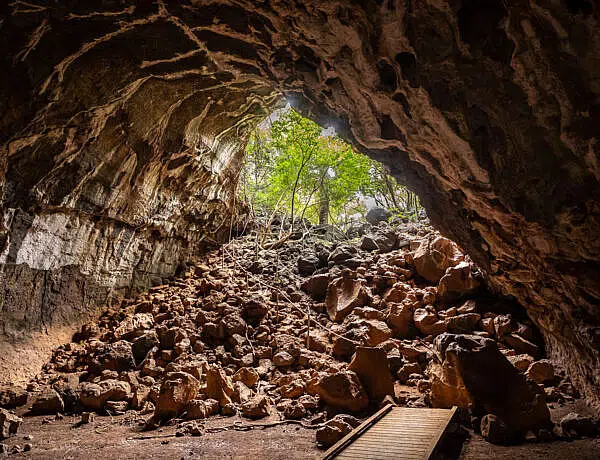
That changed at Umbrawarra Gorge Nature Park (NT) not even a month into our trip. We spotted a couple with a basic tent and homemade trailer setup running a Mini for the afternoon. The husband did what he does best—went over for a yarn—and discovered the real-world setup was entirely uncomplicated.
You don’t need a massive dual-battery system with an inverter or other technology. You just need a capable portable power bank and a way to charge it via 12V while driving or in camp using a secondary battery setup. And that’s exactly what we did.

After some hiccups, I managed to buy a Starlink Mini at Officeworks in Darwin a couple of weeks later. Given limited physical space in the car, we paired it with the compact Powertech 155W Portable Power Centre from Jaycar, and signed up for the Starlink Roam subscription (50Gb for $80 a month).
A FEW STARLINK MINI DETAILS
- Setup Time: Expect about 5-10 minutes for the modem to find a satellite and establish a stable connection. Once connected, it rarely dropped out under clear skies—which was the case for most our time in the NT and WA.
- Power Usage: The Starlink Mini is power-hungry. Our low-key setup didn’t allow for hours of continuous streaming but it was more than enough for our needs. From our fully charged power unit, we’d consistently get about 3-4 hours of connectivity, depending on upload/download demands.
- Speed: We found the speed more than sufficient for our needs, which was mostly planning and checking information, but also uploading photos to share and watching the occasional footy match. 😁 We only once ran out of our allocated data usage over the course of our trip.
- Charging the Portable Powerbank: We usually charged it while driving, plugging its 240V wall charger into our compact 12V inverter as we found it charged way faster than using a standard cigarette lighter cord. In camp, we would top it up from our secondary battery system (which runs off our solar panels) using the external 12V plug wired into our rear bumper bar.
- Main Use: Planning our trip and making campground bookings on the go. With almost all states having shifted exclusively to online national park bookings, being able to secure a site on the go became really necessary. Without it, managing life on the road would have been a lot harder. At quieter spots, we’d even drive to the camping area first, pick the best available site and book right there on the spot.
- Space & Storage: While compact, it still requires a dedicated, secure spot in the vehicle unless it’s permanently mounted. Because we bought ours on the fly in Darwin, it spent the entire trip in its original cardboard packaging. The box survived amazingly well tucked into the back of the car but I’ll be buying this dedicated storage bag before the next trip.

Although this is very popular now, we never set up our Mini in the car while driving. Instead, we used it on an ad hoc basis when we had a need.
PLB vs ZOLEO vs STARLINK MINI: A CRITICAL REVIEW
So, for most of our 8-months on the road, we had a four-way communications setup.
WHAT I WOULDN’T BUY AGAIN
You’ve probably already guessed what I wouldn’t buy again: The Zoleo communication device.
With Telstra rolling out more and more SpaceX satellite texting automatically on upfront plans, these standalone satellite messaging devices seem increasingly obsolete for vehicle-based travel and hiking trips to me—unless you don’t carry a dedicated PLB.
When comparing the Zoleo to its major competitor, the Garmin InReach Mini, a few differences emerge:
- The Network & Coverage: Both devices run on the same Iridium satellite network so their actual geographic coverage is identical.
- The Phone Dependency: The Garmin features a tiny screen to type and read text messages independently. The Zoleo, on the other hand, has no built-in screen—you must pair it via bluetooth with the app on your phone. If your phone battery dies, freezes or takes a plunge during a river crossing, you lose all communication capability. You are limited to the physical SOS button or sending a preset check-in signal on the device.
- The Cost: At $299, the Zoleo is half the upfront price of the $679 Garmin InReach Mini. However, the ongoing subscription costs—ranging from $32 to $80 per month plus activation fees and ongoing monthly plan-holding fees just to pause the service—quickly turn these devices into money traps.
WHY WE STILL CARRY A DEDICATED PLB
Having a PLB—whether on a road trip or overnight hike—is an absolute must in Australia.
It only costs you about $400-500 once, the batteries last just about forever, usually 7 years or more (but test the PLB before heading out regardless), and you don’t need an ongoing subscription. In a genuine emergency, you activate the physical button and search & rescue will be alerted quick smart. If you register your trip with AMSA, they’ll be even faster in locating you.
The one advantage a Zoleo has over a PLB is that, provided your phone is still working, a first responder team can communicate via the Zoleo App with you and confirm your position and discuss your specific emergency situation.
We love our KTI beacon because it’s so lightweight but that specific model is no longer available. The RescueME is a great alternative if you’re looking for a reliable, very compact unit that fits easily into a hiking pack. It’s what I’m looking at for when we’ll have to replace our current PLB in a couple of years.
Check the current price for the Ocean Signal RescueME PLB at Wild Earth.
STARLINK MINI FOR REMOTE CAMPING
For roaming internet and connectivity across remote Australia, you can’t go past a satellite setup these days. Full Telstra coverage will get you far but Starlink gets you further and beyond the mobile network.
I was very reluctant to get a Mini because it completely reshapes the way people travel and relax in camp (watching movies and all that jazz). But even we’re not immune and used Mr Mini to watch the footy finals in the middle of nowhere. 🙂

But if you like the kinds of remote camping spots we do, it is effectively the only way to book your sites on the move now that national parks have shifted so heavily to online bookings, especially if you want to score a site at popular campgrounds (looking at you, Osprey Bay and Lucky Bay!).
Regardless, make sure you still take a PLB. You can carry a beacon on your person, and in a genuine emergency, you want to be able to simply press a physical button rather than wait for a satellite modem to fire up and connect.
WHAT WE WOULD DO TODAY
So, if we were packing the car again today, I’d save my money and ditch the Zoleo, get a proper storage bag for our Starlink Mini and probably get a bigger powerbank or 12V-adapter for the Starlink. We still wouldn’t want it mounted on the dash in the car since we don’t want to be connected all the time.
- Telstra eSIM + upfront plan
- PLB
- Starlink Mini
FOR OVERNIGHT HIKES
Our overnight hikes on our Great Aussie Road Trip were shorter hikes between 3-5 days, and while I carried my phone (obviously), the PLB and the Zoleo, I would simply revert back to what we used to do: Phone + PLB.
Even if we hiked a long-distance track like the Larapinta Trail again, I doubt I’d take the Zoleo now or invest in a Garmin InReach. I would just rely on extended Telstra coverage + our PLB instead.
The only caveat might be if I hiked solo—then I might take the Zoleo over the PLB, or even invest in the smaller InReach Mini so I could send messages from it and not have to rely on my phone battery for communication.
Let me know in the comments below if you’ve wrestled with the same comms dilemma for your setup, or how you manage online camp bookings when you’re completely off-grid.
Happy communicating,



1 Comment
paul woodhouse
6 September 2026 at 9:03 PMmy daughter’s PLB has expired and she needs a new one.
would welcome any advice or web reviews etc
re: PLB used in anger
roof top/?pop up tent on a land cruiser
bathroom call over night
rear door stuck
bit of heft opened the door
fell out
hip fracture
phone on top bunk
alpine australia conditions
on own in frigid temps
had locked car
luckily had car keys in pocket
able to somehow get to driver’s door
PLB in glove box
no idea how retrieved and activated
but with ignition on blue tooth working with the physically unreachable phone
-retrieved by helicopter as too long for road based recovery based on weather conditions
as QLD resident ambulance fees automatically taken out of rates so with reciprocal arrangements no out of pocket costs
somewhat surprisingly keen to have another venture on his own, with wife at home
age 70+
-the take home, I believe, is not just having emergency backup but how to get it to work
hope this will be a useful post