

This post contains affiliate links. If you buy something through these links, I may earn a small commission at no extra cost to you. I only recommend gear I’ve actually used out on the trails and really loved! Read my full disclaimer.
There are hundreds of “must-have” hiking gear lists out there – some useful, some not so much.
I’ve always found it a bit frustrating when people suggest generic catch-all items rather than talk about the gear they actually use and love.
After years of multi-day hiking and more day hikes than I could possibly count, I’ve loved, scrapped and replaced a fair bit of hiking gear. I’ve slowly narrowed things down to the pieces that I really like and now come on almost every long hike with me. So here are my top 10 items that I’m more fond of than I probably need to be. 🙂
All items mentioned were paid for; nothing sponsored. I just really like these.

(If you’re looking for inspiration for where to test your own gear, here’s a quick overview of the best multi-day hikes in Australia—according to me, that is. 🙂)
Not included here are the big items like our 2-person hiking tent – a Mont Moondance 2, which I really like, though the husband is only 95% sold on it because he finds it a bit of a squeeze to get in and out of.
I’ve also left out our Nemo Tensor sleeping mats. While they’re fantastically warm and very, very comfortable, mine did fail on the Larapinta Trail, which wasn’t ideal to say the least. Nemo didn’t bat an eyelid and replaced it without much fuss, but I’m still a bit cautious about their longevity (though the replacement has held ever since).
So instead, I’ve stuck to the smaller items – the ones that make my life on the trail just that bit easier and much more comfortable. And if you’re really keen, I have a short gear page with a few more of my favourites with things like my backpack or hiking poles.
ON THE TRAIL: GEAR THAT’S BASICALLY ON ME
Whether it’s about keeping nasty spiky bits out of my shoes or making sure my camera doesn’t wreck my neck, these items are basically part of my ‘hiking outfit’ now (doesn’t that sound a bit stupid?! 😂).
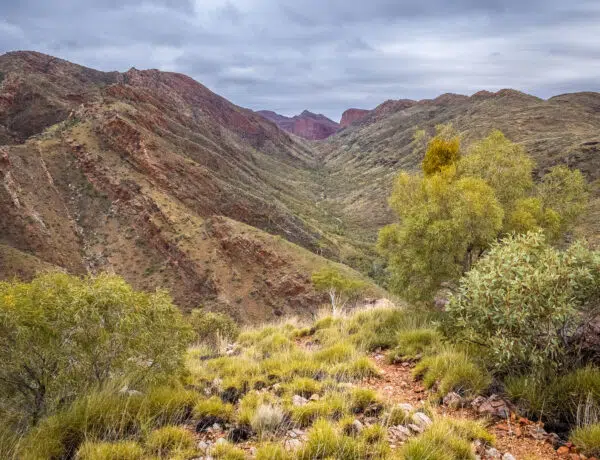
They’ve come on so many trails now, including the harsh Larapinta Trail in Outback Australia, into Piccaninny Gorge in the Kimberleys last year, and, more recently, the Heaphy Track in New Zealand.
1. ICEBREAKER MERINO WOOL SOCKS
I own a stack of merino socks, not just for hiking but also for exercise and sleeping in on our travels.
My favourites are still Icebreakers, even though their warranty isn’t as amazing as it once was (lifetime warranty, please come back!).
WHY I LOVE THEM
- Reliable durability: Icebreaker hiking socks last really well. I’ve only ever had one hole in a hiking pair and they were replaced without questions. The thinner ‘lifestyle’ versions are a bit less robust so I don’t usually wear them on the trails but keep them for off-trail use.
- The right cushioning: For multi-day hikes with a heavy pack, I stick to the Icebreaker Hike+ Medium as they provide extra cushioning. For day hikes, I may just wear Icebreaker Hike+ Light or the shorter Hike+ Light Mini socks if it’s warmer (i.e. Queensland winters 😆).
- Options for shoes: I also really like the Multisport Light Micro for warmer weather but they’re best worn with walking shoes or runners, and not boots since they’re so short.
WHAT TO KEEP IN MIND
- Slight cardboard feel: The only downside is they can get a bit stiff over the course of a few days if you’re sweating through them on long, warm/hot days. When we were doing the Larapinta Trail, we had to periodically swap them out as they were getting hard from all the sweat and dirt that we accumulated. This leads to more friction and then may result in blisters (luckily, this only happened to me on the very last day). So if your feet get wet or very sweaty, the socks can get a bit hard until you wash them again.
Find them at: Check prices at Wild Earth | View the full range at Icebreaker
2. DIRTY GIRLS GAITERS
I didn’t originally see a need for gaiters, but I finally bought a pair for the Larapinta Trail (yet again! :)) and I’ve loved them ever since. They are incredibly light and breathable, and you don’t even notice wearing them.
I’ve used them all over Australia now—from the red dust of Central Australia to sandy Piccaninny Gorge in WA—and I won’t go on a long hike without them. I’ve even convinced the husband to try them!

WHY THEY’RE PERFECT FOR ME
- Effective protection: They are brilliant at keeping sand, small pebbles, spinifex and grass seeds out of my hiking boots and walking shoes. It’s so annoying to have to stop every ten minutes to shake out your shoes (especially with a pack on!).
- Surprisingly durable: I honestly expected to rip them on the Larapinta, but they held up perfectly. In fact, I’m still using that same pair three years later. I now own three pairs in different designs.
- The “cute” factor: These come in heaps of fun patterns—my favourite pair has bear paws on them! 🙂 I’ve also got little foxes and one with cherries. Great conversation starters on the trail, haha!
WHAT’S A TINY BIT ANNOYING…
- The velcro setup: They can be a bit of a pain to set up. You have to stick a small piece of velcro to the back of your shoe to keep the gaiter in place. It’s best to carry a spare strip of velcro in your pack just in case the adhesive fails mid-hike (been there, done that).
- Just a reminder: These are for debris, not for snakes! If you’re walking through high-risk snake country, you’ll still need the heavy-duty canvas versions (like all good Tasmanians 😆).
Find them at: View the range at Paddy Pallin | Check designs at Dirty Girl Gaiters (US)
3. KULA CLOTH
My absolute top item would have to be my Kula Cloth—or cloths, since I own several. If you don’t know what they are, a Kula Cloth is basically reusable toilet paper for ladies (number 1 only), also known as a ‘pee rag’.
I’ve used them for so many years now that I don’t even remember what I used to do before owning one. I guess I always had toilet paper/tissues on hand and tried to bury them or stuff them in a ziplock bag to carry them out??
WHY IT’S MY FAVOURITE PIECE
- Environmental impact: A Kula Cloth is a great way to reduce the amount of toilet paper you have to carry in and—more importantly—pack back out (that’s always a ‘yikes’!). Or when there’s no toilet paper in the national park toilet yet again!
- Practical design: One side is a waterproof fabric with a funky print, while the other is a black, absorbent, antimicrobial fabric. It clips onto your pack (or whatever you want to attach it to) so the clean, waterproof side faces out while the absorbent side stays tucked away. You can also fold it together into a triangle shape if you feel yucky about airing it.
- Easy maintenance: They are very easy to clean – just chuck them in the wash at home (they may shrink a tad initially). They dry super quickly in the sun. And then use again and again.
IF I’M BEING PICKY…
- A slight mental hurdle: I can’t think of much of a downside, other than the mental hurdle of moving to a reusable cloth instead of toilet paper. But most hikers aren’t that fussy, and I’m seeing so many more Kula Cloths out there than I used to! Plus, they beat drip-drying any day!
Find them at: Check designs at Wild Earth
4. THINK TANK CAMERA SUPPORT STRAPS V2.0
Most people probably only carry their phone with them on hikes now, and that’s totally fine. I still like to lug my camera around, but I neither like to carry it in my pack (unless it’s too wet or the hiking is really challenging) nor do I want to hang it around my neck. I already have enough neck strain and pain as is; I don’t need to make things worse.
Since getting the Think Tank camera support straps some years ago, I haven’t looked back.

WHY I USE THEM
- Neck-free carrying: These nifty Think Tank straps clip onto each shoulder strap of my backpack and then onto the camera. The camera hangs evenly across both straps, which adds no strain to my shoulders or neck since the weight is carried by the backpack harness rather than my neck.
- Better balance: I’ve used the popular ‘Capture clip’ from Peak Design before, but I find it really only works on thinner daypack straps. It also puts a lot of weight on one side of the pack since the camera is attached to just one strap. These backpack straps distribute that weight perfectly.
- Tripod-friendly: The clip plate needed for a Capture clip doesn’t work with my tripod, which is a bit of a pain. These Think Tank straps don’t require a special plate, so my camera stays tripod-ready at all times.
THE NEGATIVE
- The dorky look: I do look a bit silly with the camera hanging in front of me across the sternum strap, but I got over that pretty quickly.
- The extra un-clipping rigmarole: The only real negative is that it’s a bit more of a hassle to take my backpack off; you first need to unclip the camera and set it aside before you can unclasp all the backpack straps to remove the pack.
Find them at: Check price at Camera House
THE LUNCH BREAK: HAVING A REST
When you finally drop the pack for a break, it’s usually because I need to eat, drink or give my usually worn-out feet a rest. This stuff is just about making the trail a bit easier on my aging body and keeping me healthy. 🙂
5. EXPED FLEX SITPAD
Sometimes I think I live under a rock because I only discovered sitpads while preparing for the Larapinta Trail. I’ve stashed mine into my backpack for every hike since. It’s a simple piece of gear that makes a ridiculous difference in comfort.

WHY I LIKE IT
- Incredibly light: It weighs only 45g (so basically nothing) and easily slides into the outside pocket of my pack, so it’s always accessible for taking a break on those rocks or wet logs (hello, New Zealand hikes!).
- More than a seat: Apart from cushioning hard rocks or trees that serve as “benches”, it can serve as extra padding under a sleeping mat. This came in very handy on the Larapinta when my Nemo mat failed; the sitpad provided much-needed cushioning under the hips as the mat slowly ran out of puff each night. It’s a great backup for a failing mat or just for extra insulation.
- Budget-friendly: It’s pretty cheap so you won’t break the bank if you’re unsure about needing one.
IF I’M BEING SUPER PICKY…
- The kite effect: Because it’s so light and isn’t attached to anything, it’ll fly away the second you stand up if there’s a breeze. I’ve chased it cross-country more than once…
- The bulk: It doesn’t deflate, so it does take up a bit of physical space. But you can strap it to your pack if you don’t have outside pocket space. And honestly, it can make such a difference, it’s worth it.
Find it online: Check price at Snowys
6. GRAYL GEOPRESS WATER PURIFIER (710ML)
We’ve had our Grayl Geopress for over five years now and still love it.
It’s our main way of sorting out water on hikes. There are definitely lighter water filter options out there, but this is the one I actually trust when the water source looks a bit dodgy. It’s a purifier, not just a filter, so it handles the stuff that a basic squeeze filter won’t touch.
WHY IT’S WORTH IT
- Clean water, fast: You get about 700ml of clean water in one go. You aren’t sitting there for ages waiting for chemicals to work or squeezing a bag until your hands hurt; once you’ve pressed it, it’s done.
- It gets the grit out: I love that it filters out the actual particles and silt, not just the invisible bacteria. You’re left with water that actually looks like something you want to drink. Super handy when the water source is a bit sketchier.
- It lasts: We’ve found the filter cartridges last a long time. As the filter gets dirty (i.e. full), it takes more and more effort to press down so you know when it’s time to change. We’re just now at the point where we have to change our first filter (an easy replacement).
THE DOWNSIDE
- The “weight” issue: It is a bit of a beast, to be honest. It’s bulky and definitely takes up a fair amount of space in the pack. You have to decide if the peace of mind is worth the extra weight (for me, it is). You could go with the smaller UltraPress version if space is of a premium.
- Don’t believe the ads: The videos make it look incredibly easy, but it actually takes some serious effort to press down, especially as the filter gets older. It takes a bit of a knack to get your body weight over it properly!
Find it online: Check it out at Wild Earth | View at Snowys
7. HUMANGEAR STAX CONTAINERS
Like a few other things on this list, we originally got these for the Larapinta, but they’ve been in the pack for every multi-day hike since. We use a mix of the medium and large-sized ones to keep all those little essentials from getting lost in the bottom of our packs.

WHY I LOVE THEM
- The “drink station”: We use the large containers for our coffee, sugar, and milk powder. The husband absolutely loves them because it keeps all the “hot drink” bits together in one neat stack. No more hunting through the pack for various, half-hidden ziplock bags just to make a coffee.
- Actually spill-proof: I use the medium-sized ones for things like peanut butter or dip (big enough for 3-4 days), and the others for supplements. Even with messy stuff like peanut butter, nothing has ever leaked. They have proper silicone seals that I totally trust.
- Organised and less waste: Because you can stack as many or as few as you need—take two, take three, take all—they’re completely modular. Because they’re reusable and food grade, I don’t carry coffee or sugar sachets around anymore. They’re also great for snacks or anything really that works for you.
- No lost lids: A huge plus is that because they literally stack into each other, you aren’t constantly chasing loose lids around your lap. The lid for one container clicks onto the base of the next, so everything stays together. I love that feature!
THE TRADE-OFF
- The weight trade-off: They’re obviously heavier than ziplock bags and coffee sachets, but for the sake of an organised pack and zero spills, the extra grams are totally worth it for us.
Find them online: Check the Stax range at Wild Earth
AT CAMP: STUFF FOR THE NIGHT
Once the walking is done, the goal is pretty simple: get comfy and get some rest.
I can get a bit anxious at times and also need my sleep (mostly because I’m not as young as I used to be), and these are a few items that make a tent feel less like a nylon castle and more like a home.
8. EXPED REM HIKING PILLOW
I used to just stuff a few clothes together and hope for the best, but I kept waking up with a sore neck and that finally got to me (plus, I’m getting older and can’t put up with things in the same way anymore).
It took me ages to decide which one to go with but I finally settled on the Exped REM pillow and couldn’t be happier! It has foam chips inside as well as air, so it feels a lot more like a “real” pillow than the bouncy, plastic-y air ones.
WHY I REALLY LOVE IT
- The “husband-proof” adjustment: The best thing about this pillow is how much you can change the height. I like mine quite firm, but the husband needs his to be much flatter. You can just bleed a bit of air out until it’s exactly how you like it.
- Warm and quiet: Because it’s not just a bag of air, it doesn’t feel cold against your face and it’s not super noisy when you move around at night. It actually feels cozy and snug.
- Easy to keep clean: The cover is removable and you can just throw it in the wash when you get home. I actually wrap mine in a buff at night anyway—it keeps the cover clean and just feels a bit nicer to sleep on.
A TINY DOWNSIDE
- A bit bulky: Because of those foam chips, the REM pillow doesn’t pack down tiny. It definitely takes up a bit more room in the pack than the ultralight versions, but it easily squeezes into the bottom of my pack next to my sleeping bag.
Find it online: Check price at K2 Base Camp
9. BIOLITE LUCI CLEAR SOLAR LANTERN
We’ve had our Luci light for ages now—it’s a very old version (used to be called the Luci Outdoor 2.0), but it’s the same inflatable lantern. Ours still works perfectly even after seven, eight years.
It’s a simple, light little thing that makes being in the tent at night a bit more cozy.

WHY IT’S GREAT
- Easy to charge: I just hang it off my backpack while I’m walking or strap it to the outside of the tent once we’ve set up in the afternoon. In Australia, we get enough sunshine that it’s basically always ready to go by the time it gets dark (well, unless you’re always hiking in Tassie).
- Actually holds its charge: The battery in this is solid. Even if it’s been sitting in the cupboard for months between trips, it still has power when I pull it out. Some of the pro versions even have USB ports so you can use the solar power to top up your other gear, pretty handy I’d say.
- Saves your head torch: It gives off a nice, soft glow in the tent. It’s much better than a harsh head torch beam, and it means you aren’t wasting your head torch charge just to see what you’re doing at night.
- Light and cheap: It weighs next to nothing and doesn’t cost a bomb. It’s one of those rare bits of gear that is actually affordable and does exactly what it’s supposed to do.
WHAT TO KEEP IN MIND
- The “inflatable” bit: Because you have to blow it up, it can be a bit fiddly to get the valve in and out of the squished up lantern.
- Overcast days: The battery is good, but if you have a few days of heavy rain or thick cloud, you have to be a bit more strategic about where you hang it to make sure it’s catching enough light.
Find it online: Check Luci Lights at Wild Earth | View at Snowys
10. KNOG BANDICOOT HEADLAMP
I have a pretty tiny head for an adult, and I’ve always found most head torches are just too heavy—they never stay put. I’ve stuck with Knog for years now because they’re super light and actually stay exactly where they should be without constantly dropping over my eyes.
WHY IT WORKS FOR ME
- A proper fit: Because it’s so low-profile, it doesn’t bounce around. It’s the only head torch I’ve found that actually feels like it fits someone with a smaller head properly.
- Simple charging: You don’t have to mess around with spare batteries or cables; you just take out the middle part and plug the unit straight into a USB port.
- Made in Australia: I really like that these are designed here. My first one lasted five years before it finally died on our road trip around Australia last year, which is a fair amount of use for something that gets knocked around as much as a head torch.
WHAT COULD BE BETTER
- The hair snag: Because the strap is silicone, it can definitely catch your hair if you aren’t careful putting it on or taking it off. It’s a bit annoying if you have longer hair, but I’ll take that over a torch that’s constantly sliding down my face.
- They don’t last forever: Since the battery is built-in, once it eventually stops holding a charge, you can’t really fix it. You just have to accept that they have a bit of a shelf life.
Find it online: Check price at Wild Earth
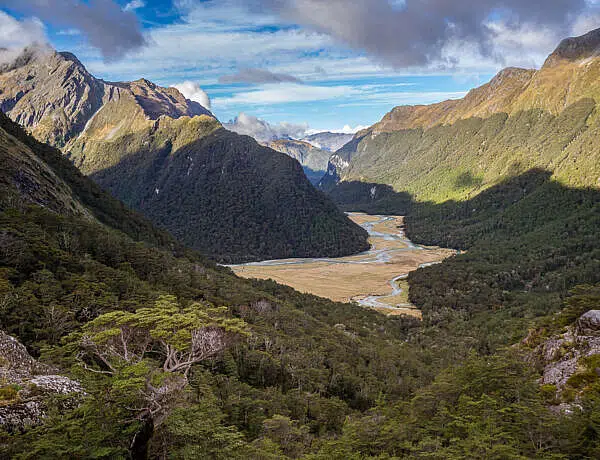
Where I actually use this stuff: These “little” extras have brought me calm and comfort everywhere from the remote Larapinta Trail and the busy Routeburn Track to the rocky coastal stretches of Kangaroo Island. If you’re planning your own adventure, you can find my full hiking guides and logistics over there.
THE LITTLE THINGS THAT MAKE A BIG DIFFERENCE
I have a big spreadsheet for all my gear for big hikes but the list is never really “finished”.
Every few trips, something gets swapped out or left behind as I figure out what I actually use, and what’s just taking up space. For now, these ten things actually end up on my feet or head or in my pack every time.
If you’re looking to refine your own setup, my best advice is to just keep track of the things you didn’t use on your last few hikes. That’s usually the easiest way to figure out what’s actually worth the weight, and what you’re just lugging along for the ride.
Happy hiking!

If you want a quick glance at the rest of my gear without all the extra detail, I’ve included a few other bits and pieces over here.

1 Comment
How Do I Know If My Hiking Shoes Are Worn Out? (2026 Guide) – Best Outdoor Picker
6 May 2026 at 6:57 AM[…] structural cup has cracked or shifted, it can cause permanent alignment issues and blisters that no amount of thick socks will ever […]